
How Do Rider Safety Enhancements Improve Everyday Riding on the 2026 Harley-Davidson® Low Rider® S around Alton, IL?
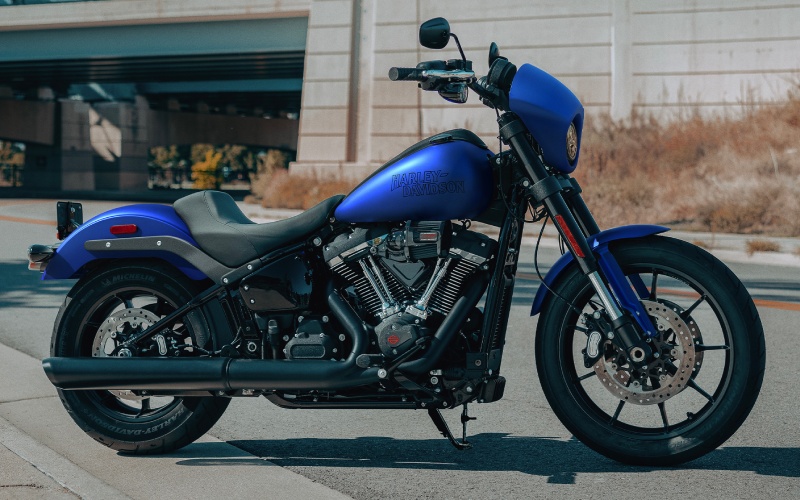
Lawless Harley-Davidson® - How Do Rider Safety Enhancements Improve Everyday Riding on the 2026 Harley-Davidson® Low Rider® S around Alton, IL?
Riders evaluating a modern performance cruiser want real clarity on how technology supports skill without dulling feel. On the 2026 Harley-Davidson® Low Rider® S, Rider Safety Enhancements and ride modes work in the background to preserve stability when surfaces change and inputs stack up. Around Alton, IL, that might mean crossing the Clark Bridge at dawn, transitioning onto local streets with damp patches, and then heading out toward bluff roads where shade and elevation introduce cooler pavement. The question is simple: how do these systems help you keep the bike calm and composed without taking over?
Harley-Davidson® calibrates the Low Rider® S so that traction control, ABS, and drag-torque slip control remain essentially transparent unless conditions demand intervention. Selectable ride modes then tailor throttle maps and system thresholds. For example, on a cool morning with patchy moisture, a more conservative mode can smooth initial throttle and keep rear tire spin in check. When temperatures rise and grip improves, a sportier mode frees the motor’s immediate punch while maintaining cornering-aware support. The result is steady, predictable control along the Great River Road and the urban grid—without losing the intuitive, analog feel that performance riders value.
Frequently Asked Questions:
What exactly happens if traction changes mid-corner?
Cornering-aware systems estimate lean angle and adjust brake pressure and traction thresholds to help the bike remain settled. If the surface tightens up mid-turn, the electronics reduce abrupt wheel slip or lock so you can modulate throttle and complete the arc cleanly.
Do ride modes limit the Milwaukee-Eight® 117 High Output power?
Ride modes do not cap total output. They refine throttle response and how quickly torque is delivered. That allows you to match power delivery to surface conditions, keeping the rear tire loaded and predictable on cold mornings or rain-slick intersections.
How does DSCS help on downshifts into town traffic?
Drag-Torque Slip Control (and its cornering-enhanced variant where applicable) reduces excessive rear wheel slip from abrupt engine braking. When you downshift quickly or roll off harshly, DSCS smooths the transition so the rear tire stays planted as you approach a turn or stoplight.
Will I notice these systems when riding smoothly in good conditions?
In dry, consistent grip, you will mostly feel a composed chassis and immediate throttle. The systems remain unobtrusive and step in only if needed, protecting your line when a patch of gravel or crosswalk paint intrudes on your plan.
Beyond electronics, the chassis foundation matters just as much around Alton’s mix of bridges, downtown streets, and bluff-side sweepers. The Low Rider® S leverages a 43 mm inverted fork to keep the contact patch loaded under braking and during turn-in, and a hidden monoshock with hydraulic preload to maintain poise across broken pavement. Paired with Michelin® Scorcher 31 tires on Black Radiate Cast Aluminum wheels, the package communicates grip levels clearly so tech can remain a safety net—not a crutch.
If you want a deeper walk-through of mode behavior and how to set up suspension and tires for your typical route, Lawless Harley-Davidson® is ready to help, serving Paducah, Alton, and Festus. We can map mode choices to your commute, explain what you will see on the 4-inch analog-digital display during intervention, and recommend accessory options that support longer weekend rides without muting the Low Rider® S character.